Creation
Prompt
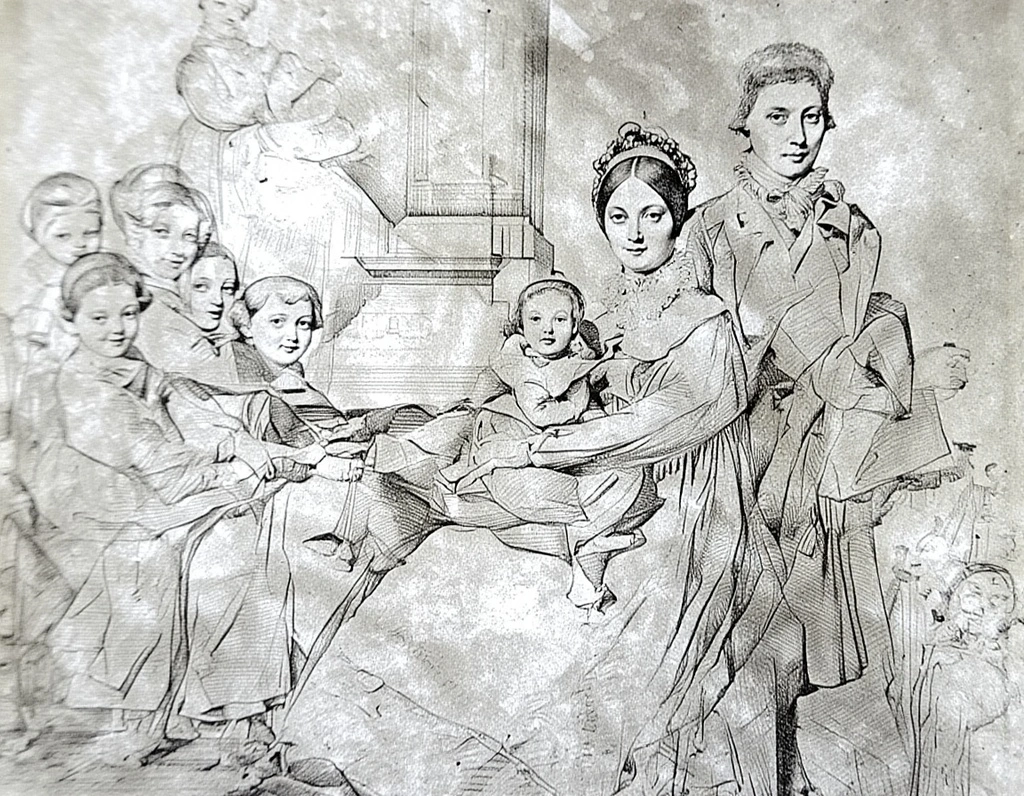
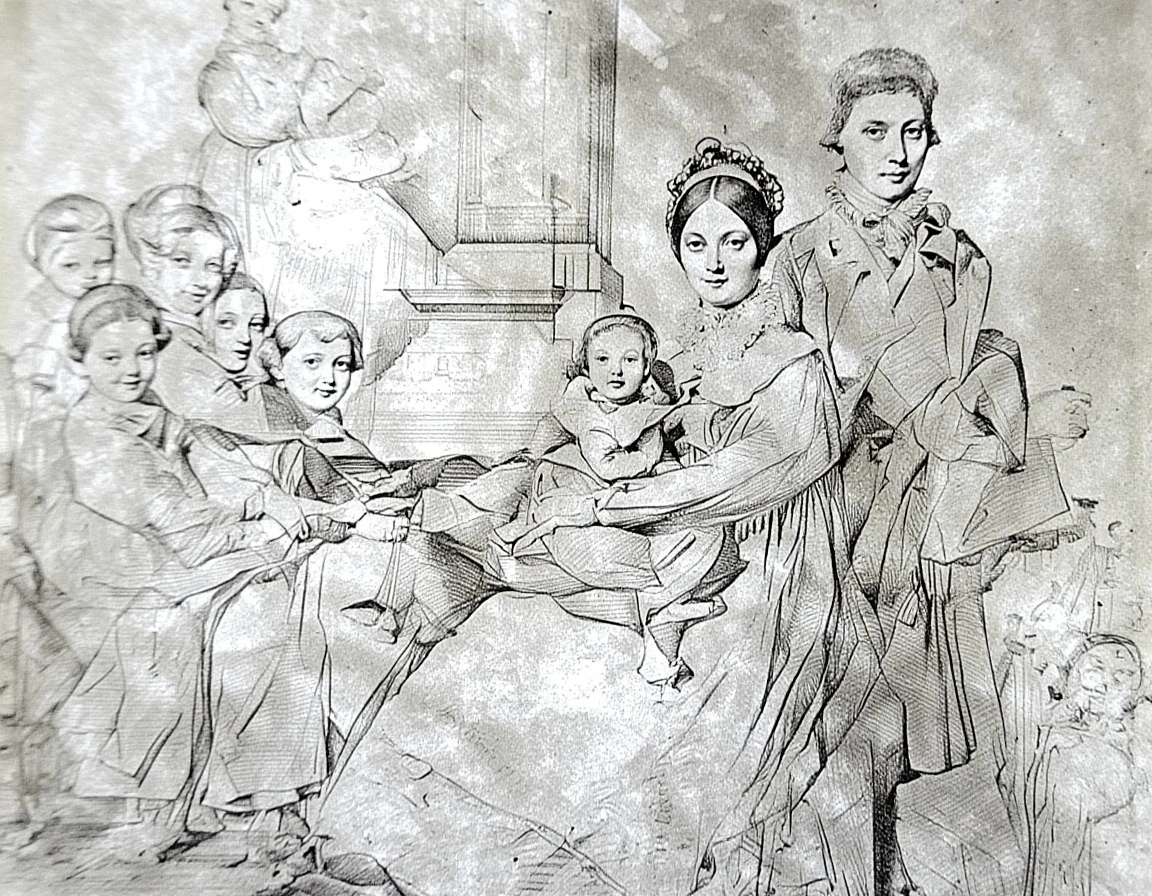
The drawing is no longer a drawing it is a futuristic message broadcast across the interdimensional divide between our world and theirs
It is a window (fixed open, perfectly rectangular, framed by Corinthian columns on their side of reality).
On our side we see a serene Victorian family enjoying a quiet afternoon on the ruins steps.
On their side, the canvas is a one-way mirror hanging in the grand salon of some unimaginable estate. The beings who gather there have no bodies we would recognize; they appear to human eyes only as shifting absences in the air, like heat haze with intent.
At first they came alone: a single presence leaning in, curious about these fragile carbon things that keep rebuilding the same mother, the same children, the same portico no matter how many times the page is torn, burned, flooded with iron salts, or erased to atoms. A novelty, like watching ants reconstruct a ruined anthill.
Then word spread.
Now there are evenings (their evenings) when dozens arrive. They bring instruments that look like crystallized smoke. They sip something that smells of ozone and lilac. They place wagers in currencies made of unresolved probabilities.
The performance always follows the same arc, because that is what amuses them most:
1. Explosion (the page detonates into fragments; they laugh like glass bells).
2. Erasure (the eraser devours everything; they lean closer, delighted by the violence).
3. Rebirth (the faintest whisper of line returns; they hold their breath).
4. The slow, inevitable coalescence into classical beauty (the moment the mother’s face clarifies, they applaud with sounds that make dogs on our side of the veil whimper in their sleep).
5. The final, perfect tableau (this drawing). They sit back, satisfied, and the youngest among them ask, “Do it again?”
We think we are the artists.
We think the ritual is ours.
We think the explosions and the erasures are acts of rebellion or exploration.
They know better.
Every time we “choose” to blow the image apart, we are simply turning the page for the next act.
Every time we painstakingly copy our way back to serenity, we are bowing.
The mother in the portrait has begun to notice.
Look closely at her eyes in this final version: they do not look at the child in her lap.
They look straight through the canvas, calm, unblinking, ancient.
She has seen them watching.
She knows the performance is almost over.
She is waiting for the moment when we finally tire of destroying and rebuilding the only stable image the multiverse will allow.
On that day, she will stand up, walk down the steps toward the picture plane, and close the portal from our side.
Until then, the affluent spectators sip their lilac-ozone and wait for the next explosion.
They have excellent seats.
And we, without knowing it, have been taking our bows for 175 years.
Model
Model 2
Tool:flux_dev
Recent creations from 
xe7c_mars